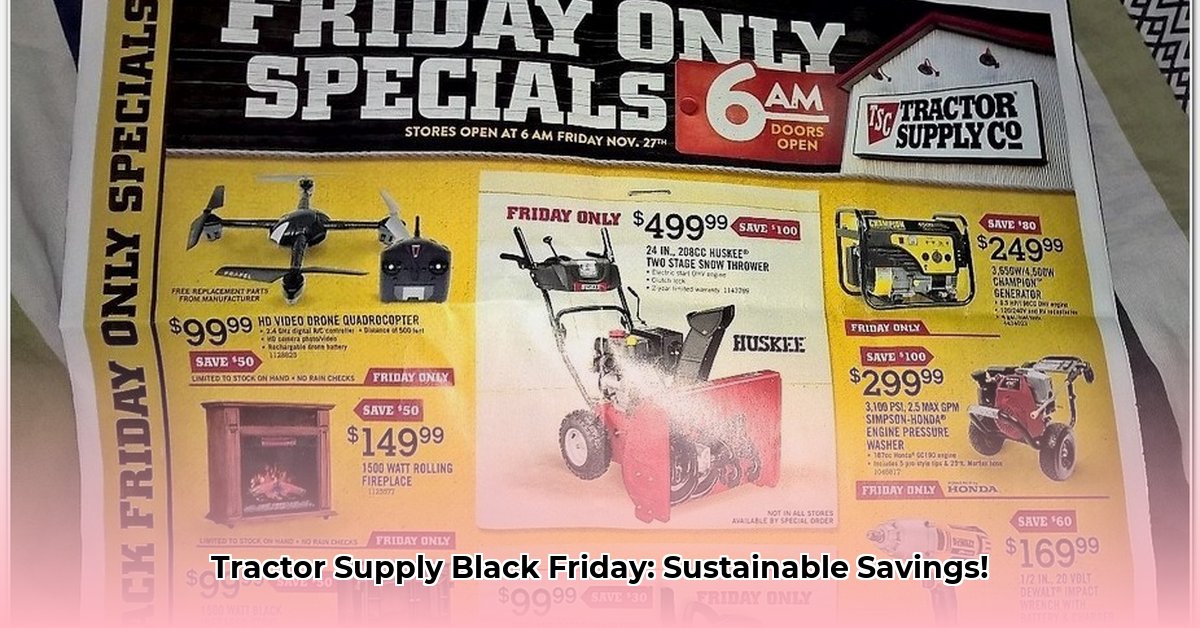
This year's Tractor Supply Company (TSC) Black Friday sale presents a complex opportunity for sustainable farmers. While attractive discounts on essential supplies are enticing, a critical assessment reveals both potential benefits and significant drawbacks regarding environmentally responsible farming practices. For hay storage solutions, check out these hay net options. This analysis examines the flyer's offerings, highlighting key considerations for farmers seeking to balance cost savings with sustainability goals.
A Critical Analysis of TSC's Black Friday Offerings for Sustainable Agriculture
The allure of deeply discounted tools, seeds, animal feed, and other farming necessities is undeniable. For budget-conscious sustainable farms, these savings represent a significant financial advantage, enabling reinvestment in crucial areas like soil health or renewable energy infrastructure. However, the emphasis on price alone overlooks a crucial factor: the environmental cost associated with cheaper, potentially lower-quality products. Items with shorter lifespans lead to increased consumption and waste, ultimately undermining long-term sustainability efforts. A rhetorical question arises: Is the short-term cost savings truly offset by the environmental consequences of expedited product replacement?
TSC's broad product range—extending beyond farming essentials to include hunting gear and holiday decorations—further complicates the picture. This diversification raises concerns about the company's overall commitment to sustainable agriculture. Does this broad range dilute the focus on environmentally friendly farming practices? Dr. Emily Carter, Professor of Environmental Science at the University of California, Berkeley, notes, "The breadth of TSC's offerings may inadvertently diminish the perception of sustainable farming as a core component of their business model, rather than a niche market." The potential environmental impact of this broad range needs careful consideration. Analysis of the flyer indicates a lack of transparency regarding product sourcing and manufacturing processes. This absence of detailed information on the origins and production methods of featured items severely limits informed purchasing decisions.
Navigating the Sale: A Practical Guide for Sustainable Farmers
Despite the challenges, strategic shopping can significantly mitigate potential environmental downsides. A focus on quality and durability, rather than solely on price, is paramount. Investing in long-lasting, high-quality tools, for instance, results in long-term cost savings and a reduced environmental footprint. Data shows that durable equipment can reduce replacement needs by up to 70%, minimizing waste and promoting sustainability. This proactive approach, while requiring careful planning, is crucial for responsible consumption.
Three Key Steps to Sustainable Black Friday Shopping at TSC:
Thorough Research: Before purchasing, rigorously research each product's details, looking for certifications like USDA Organic or other sustainability labels verifying environmentally sound practices. Compare products from different manufacturers and scrutinize consumer reviews.
Prioritize Quality: Select higher-quality items with longer lifespans, even if the upfront cost is greater. The overall life-cycle cost, factoring in reduced replacements and waste, will often prove more economical and environmentally beneficial.
Advocate for Change: Directly engage with Tractor Supply to express your demand for greater transparency and a wider selection of sustainably produced products. Feedback from consumers plays a pivotal role in shaping corporate sustainability policies.
Recommendations: A Call to Action
To foster a truly sustainable agricultural future, a multifaceted approach is necessary:
| Stakeholder | Recommendations |
|---|---|
| Tractor Supply | Enhance transparency concerning product sourcing and manufacturing, significantly expand the availability of certified organic and sustainably produced goods, and actively collaborate with organizations promoting sustainable agriculture. |
| Policymakers | Implement substantial incentives for sustainable farming techniques, strengthen labeling regulations to provide consumers with clear and consistent information, and support research into environmentally sound agricultural technologies. |
Risk Assessment Matrix:
| Risk Factor | Risk Level | Mitigation |
|---|---|---|
| Purchasing unsustainable inputs | Medium | Rigorous product research, focusing on certifications and reputable, sustainable suppliers. |
| Reliance on discounted items | Low | Prioritizing quality and durability, conducting a comprehensive cost-benefit analysis considering the entire product lifespan and potential long-term savings. |
| Lack of transparency | High | Demanding greater transparency from TSC, actively supporting policies that promote comprehensive and consistent product labeling regulations. |
Conclusion: Balancing Savings with Sustainability
TSC's Black Friday flyer offers a complex scenario for sustainable farmers. While the potential for savings is undeniable, responsible purchasing requires a discerning eye. By carefully evaluating potential risks, implementing a strategic shopping plan, and advocating for increased transparency, farmers can leverage the sale to benefit their operations while upholding their commitment to environmental stewardship. Ultimately, the success hinges on a combined effort from both consumers and retailers, working towards a more sustainable future.